“Hope for a Future” - Celebrating the 60th anniversary with the cast of Star Trek
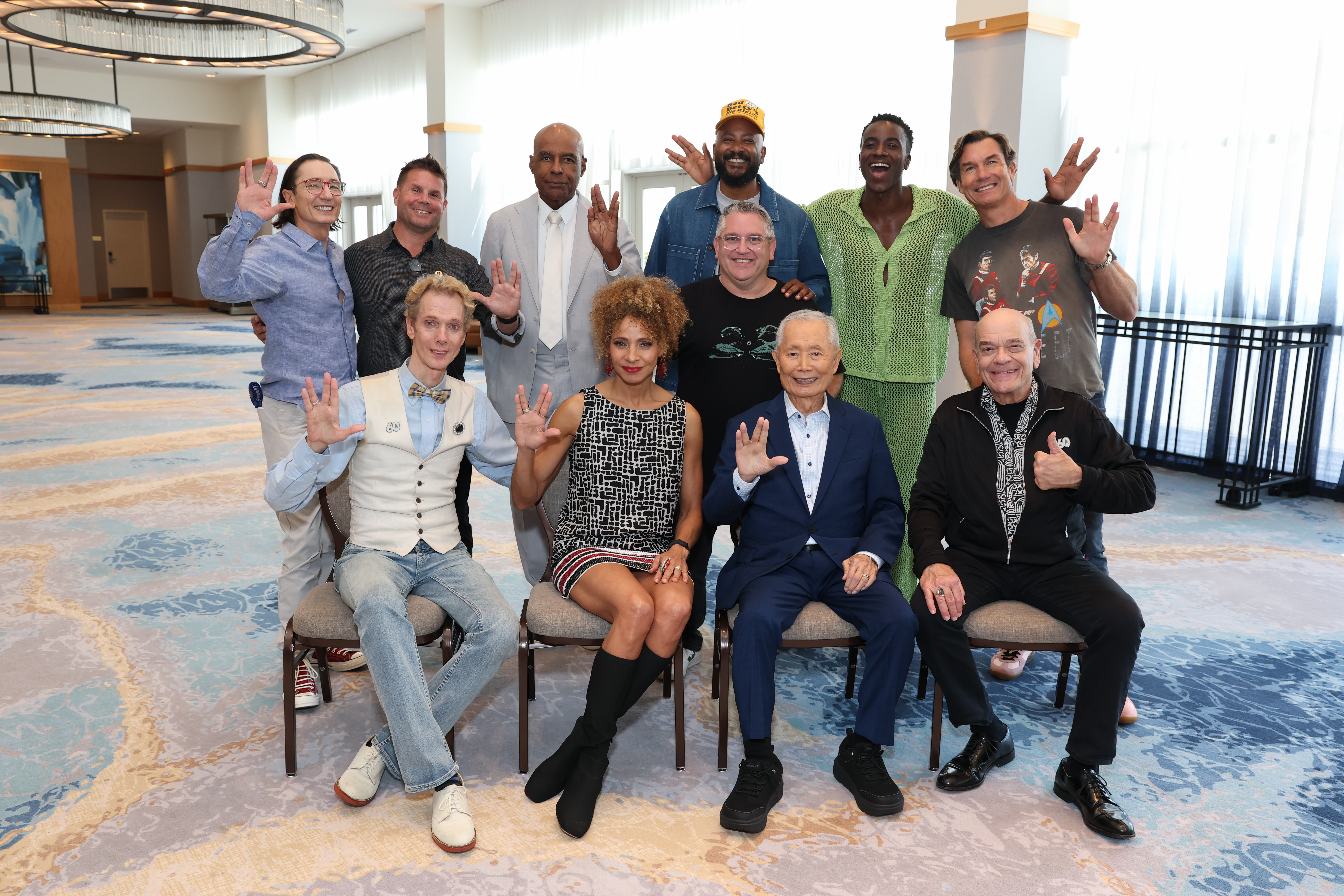
Photo Credit: Todd Williamson/January Images for CBS/Paramount+
As Star Trek celebrates 60 years of exploration, the franchise continues to inspire new stories, new voices, and new conversations about its enduring legacy and the future it imagines. At San Diego Comic-Con, Giraffe sat down with members of the Star Trek family : George Takei, Michael Dorn, Karim Diané, Jerry O’Connell, Doug Jones, Robert Picardo, Cirroc Lofton, Dominic Keating, and Rod Roddenberry, to talk about the stories and characters that shaped generations of fans, from mentorship and character journeys to representation and the enduring hope at the heart of the franchise.
GEORGE TAKEI
Promoting Federation Values, Both On and Off-Screen
While he is proud of his notoriety for breaking barriers on American television with Star Trek: The Original Series as the swashbuckling helmsman Hikaru Sulu, George Takei’s identity as an activist and author is inseparable from his identity as Sulu. He sees this as reflective of Star Trek’s ethos. "It's what you do with what you have,” Takei said. “I'm proud of my association with Star Trek, but also I do other things which contributes to your Star Trek idea."
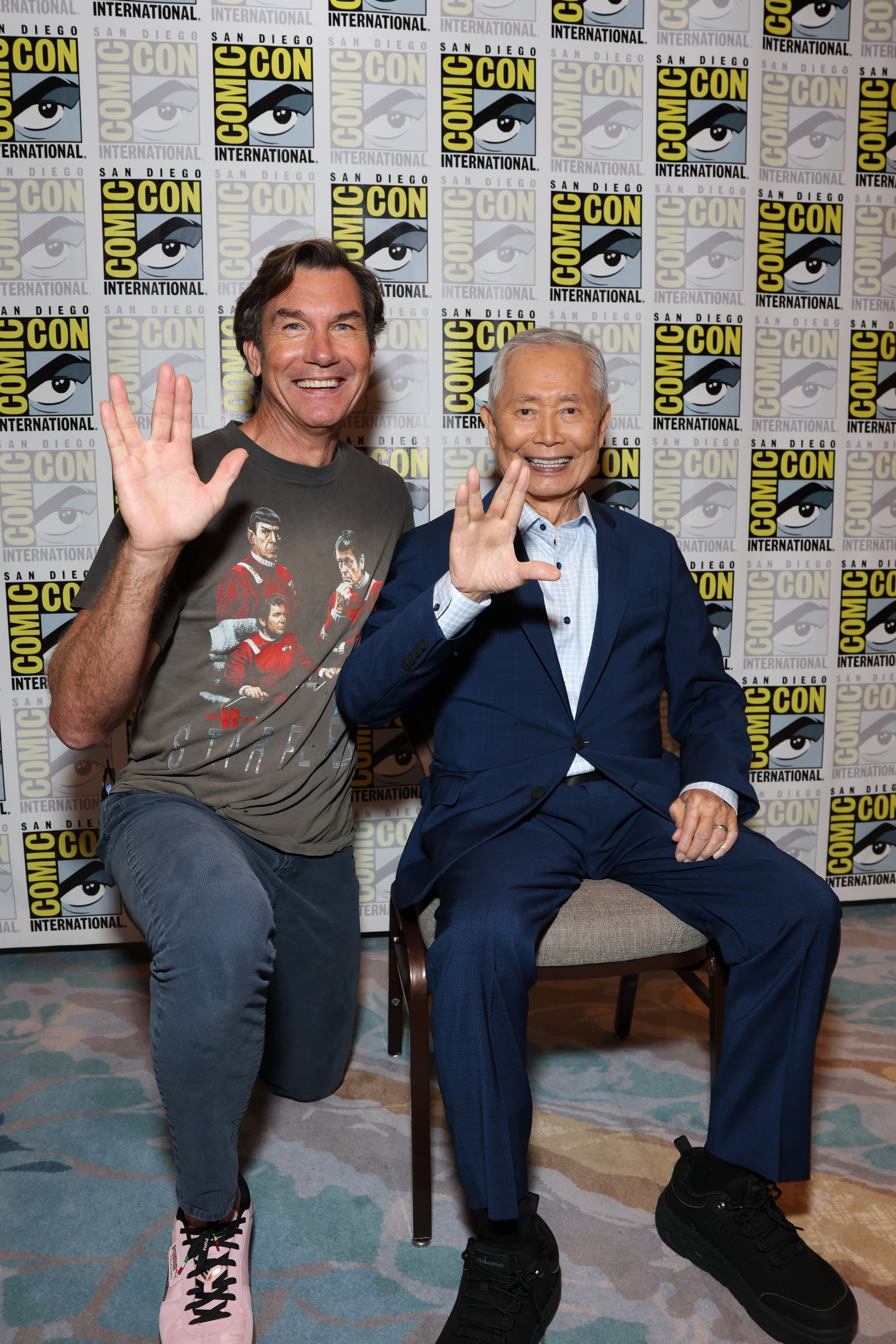
Photo Credit: Todd Williamson/January Images for CBS/Paramount+
As a survivor of the Japanese American internment camps constructed by the US government in World War II, he has authored multiple books that candidly share his experiences as a child living in the camps. He drew a sweeping historical arc, from the Revolutionary War through the Great Depression and WWII internment, to argue that America has always faced adversaries and required principled leaders, using Roosevelt as a complex example: "Roosevelt said, 'We have nothing to fear but fear itself.' And he was able to galvanize despairing people… He was a great leader in that respect. But my father said when he panicked after Pearl Harbor... And when you have a streak of racism, it comes out." A prominent advocate for LGBTQ rights, Takei drew a direct parallel between the anti-Japanese hysteria of the 1940s and the current political climate targeting LGBTQ communities and other minority groups, calling on the public to participate actively in upcoming elections as a critical mechanism for course correction.
Taking Command in The Undiscovered Country
Of all the episodes and films across the Star Trek franchise, Takei’s definitive favorite is Star Trek VI: The Undiscovered Country. The movie prominently features Sulu finally promoted to captaincy and with a command of his own, the USS Excelsior. He described Sulu’s key scenes with evident pride and joy: “At the beginning, like every beginning of Star Trek, there's a captain in the big seat on the bridge, calm and drinking his cup of hot tea. Mine comes in a cardboard box. I'm drinking tea, and suddenly the ship shakes, and there's this wave coming. I say, ‘Shields, shields!’ And they put up the shields, and thus begins pounding drama.
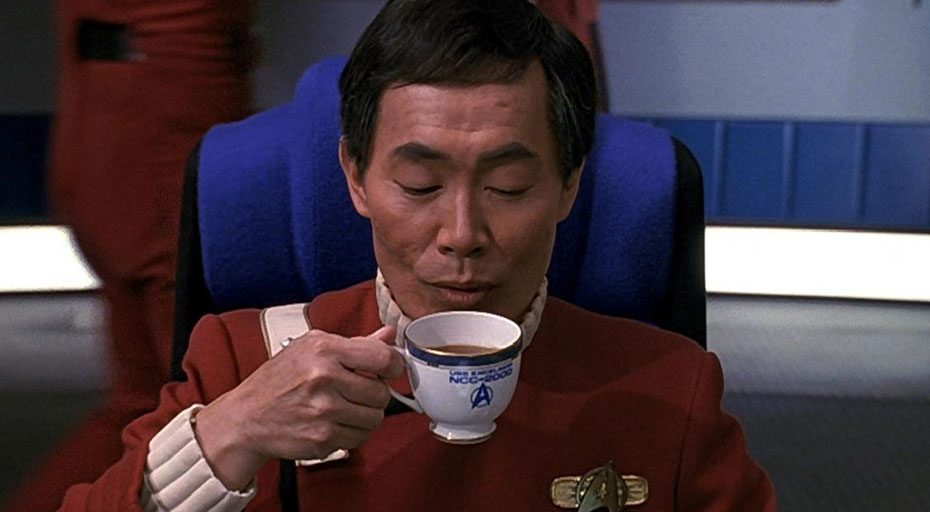
Captain Sulu in The Undiscovered Country
“And Sulu rises to the occasion. Captain Kirk is about to be blasted out of the galaxy by Klingons. And who should come to the rescue but Captain Sulu, out of the dark galaxy sky. And he says to his helmsman, ‘Target that explosion and fire,’ and blows the Klingons out of the sky.”
Infinite Diversity in Infinite Combinations: The Origin of Sulu
When he initially created Star Trek, Gene Roddenberry’s decision to include an Asian helmsman as a key crew member was intentional and deliberate. Each Enterprise crew member was intentionally designed, named, and casted to represent a different part of humanity: Nyota Uhura for Africa and women's representation; Pavel Chekov for the Soviet Union, suggesting that Cold War tensions could be transcended; and Montgomery Scott for Scotland and its shipbuilding heritage.
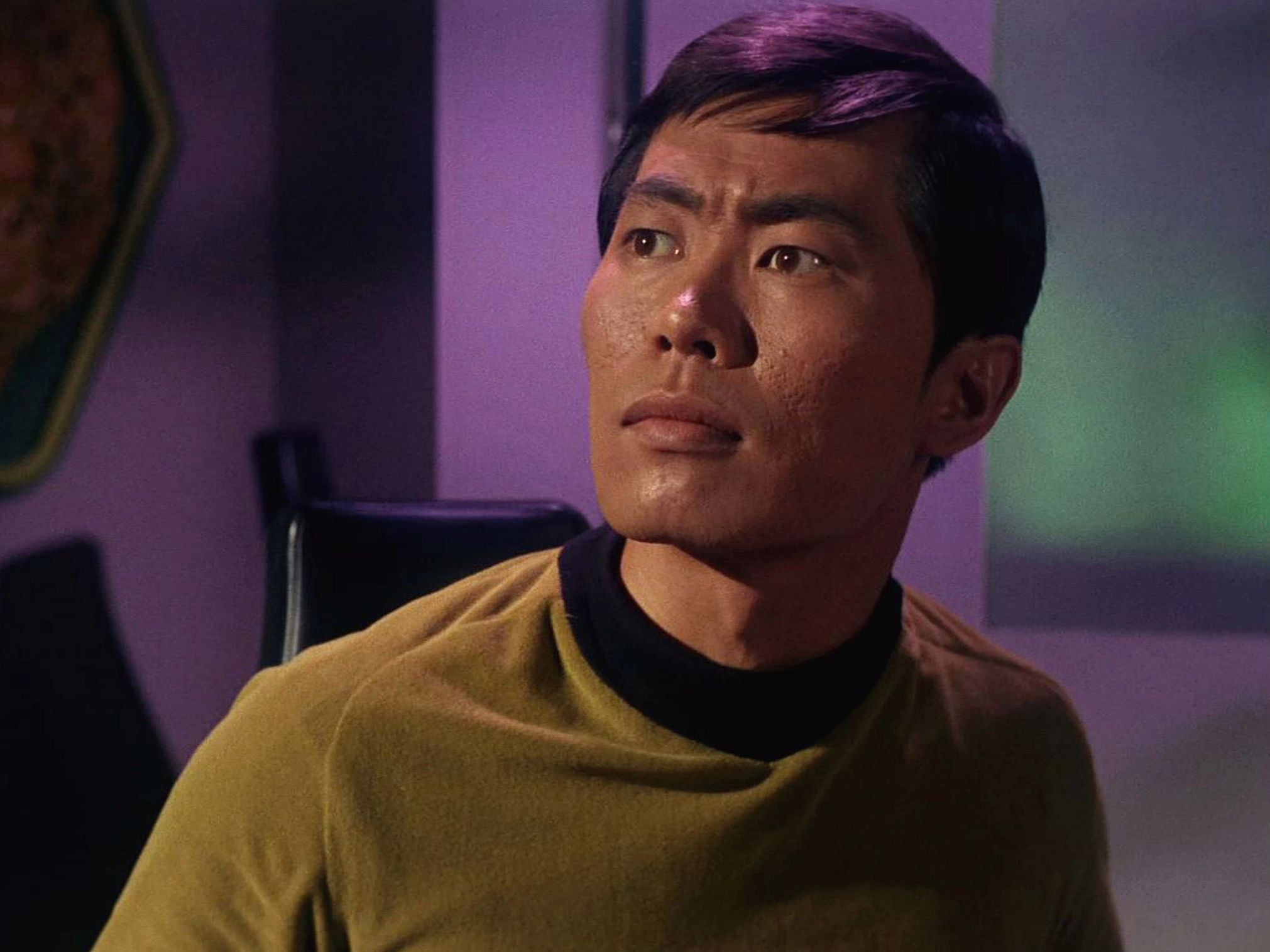
Lt. Sulu on Star Trek The Original Series
When deciding on a name for his helmsman, Roddenberry deliberately chose a name that was pan-Asian rather than nationally specific, to avoid associating the character with any single country amid mid-20th century Asian conflicts. "He found off the coast of the Philippines and China and Vietnam an ocean called the Sulu Sea,” Takei explained. “And he thought, 'The waters of the sea touch all the shores, touches China, Korea, Japan, Philippines, all the Asian areas.' And so he said, 'That's it.'" As for Sulu’s first name, “Hikaru” was drawn from a classic Japanese novel, referencing a prince who was simultaneously a swordsman, archer, poet, and painter; a combination Roddenberry admired and saw as fitting for the character.
Roddenberry's vision was that diversity, when united toward a common purpose, is a source of strength, a principle Takei considers the core of Star Trek's enduring appeal. “Each one of us represented a part of this huge planet in its great diversity,” Takei said, “and he wanted to make the diversity coming together and working as a team. And that diversity is what makes Star Trek great."
MICHAEL DORN & KARIM DIANÉ
Klingon Legacy, and Passing the Bat’leth
Michael Dorn’s history with Star Trek can be best described as “prolific,” with more on-screen appearances than any other actor in the franchise. Portraying the stalwart Klingon Worf, Dorn has appeared in over 200 episodes of Star Trek and four feature films — five if you count his appearance as Worf’s grandfather and namesake, Colonel Worf, in The Undiscovered Country. Dorn describes Worf's core traits as loyalty, fearlessness, and unwavering support for friends — a soldier who never hesitated, even in the face of certain death. "They'd say, 'Well, we're going on a mission and everybody's gonna die.' He says, 'I'll do it.' And it wasn't because of a suicide pact or anything. It was just, that was what you're supposed to do."
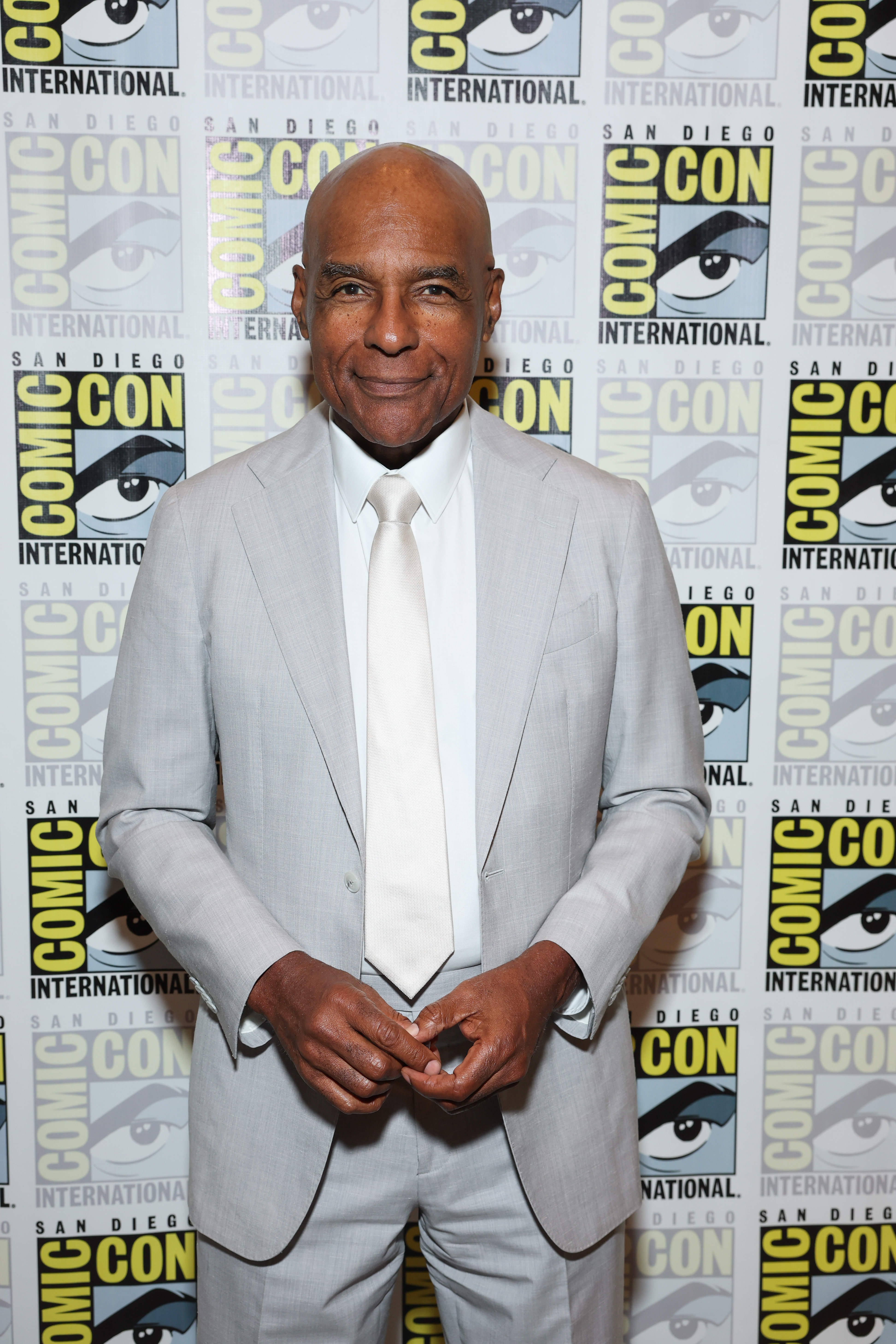
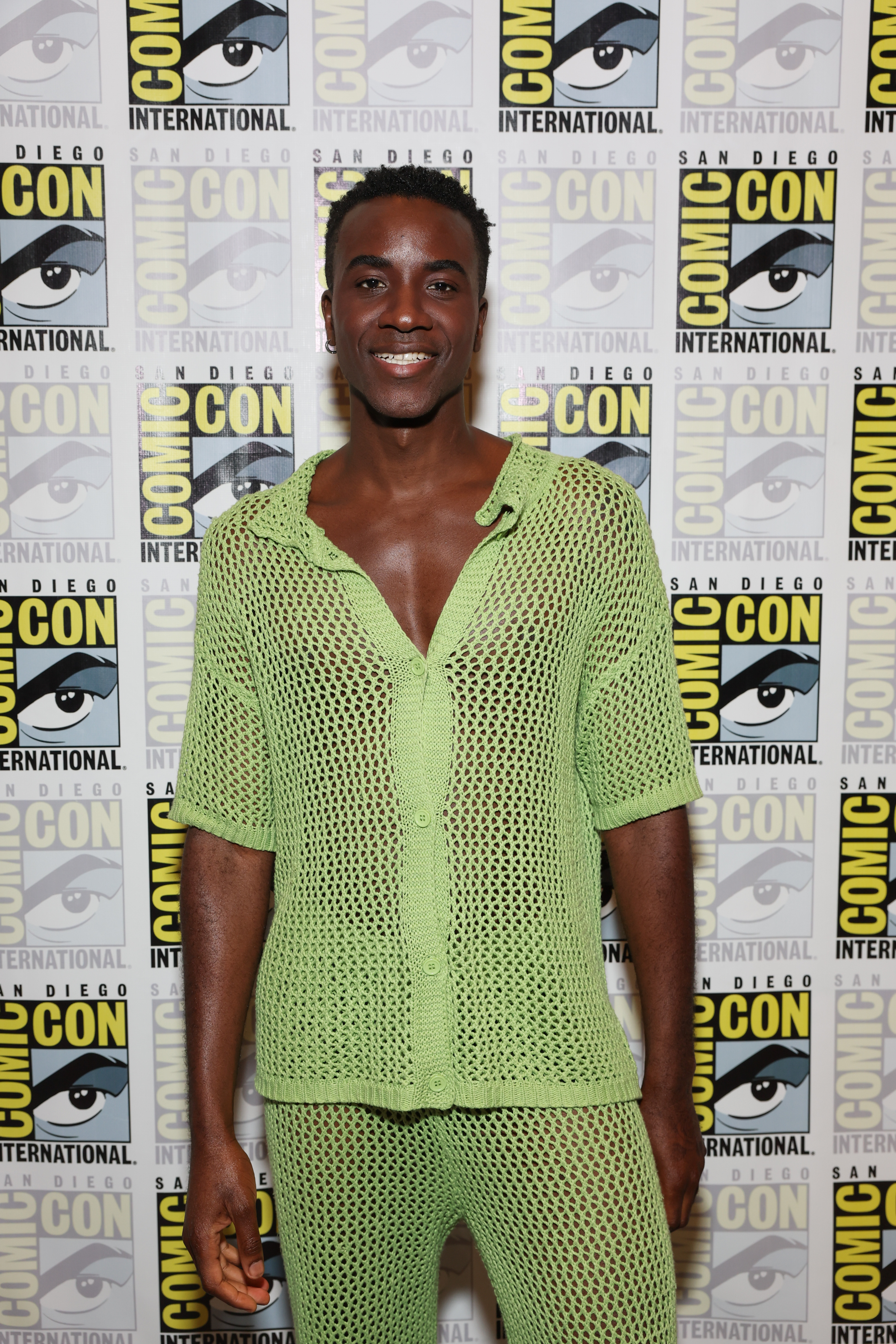
Photo Credit: Todd Williamson/January Images for CBS/Paramount+
As a regular cast member of both The Next Generation and Deep Space Nine, Dorn recalled his favorite episodes of each series that he worked on. For TNG, he named “The Drumhead,” a compelling courtroom drama with strong writing and performances, directed by castmate Jonathan Frakes. For DS9, he spoke about “Once More Unto the Breach,” a moving portrayal of Klingon honor and the warrior's desire for a meaningful death: "Klingons are like, they truly believe that 'I wanna die like a soldier.' I mean, they are really, like, serious about that. They're not joking. It's not a game. It's not bluster. It's like they truly believe it."
When asked to return for season three of Picard, Dorn and showrunner Terry Matalas collaborated to determine the evolution of Worf’s character since his last appearance in Star Trek: Nemesis, with more than twenty years of in-universe character development to account for. They agreed that Worf would arrive older, wiser, and perhaps a bit more chill than audiences remember. "I wanted him to be on a journey,” Dorn said. “I think that he should be almost a pacifist. I mean, he still slices people up. He's not quite there yet." Matalas successfully persuaded Dorn to don white hair when reprising the character, taking inspiration from Pai Mei from Quentin Tarantino’s Kill Bill: “He could kill anybody, anytime, and he had white hair. And so I said, 'Well, why not?'"
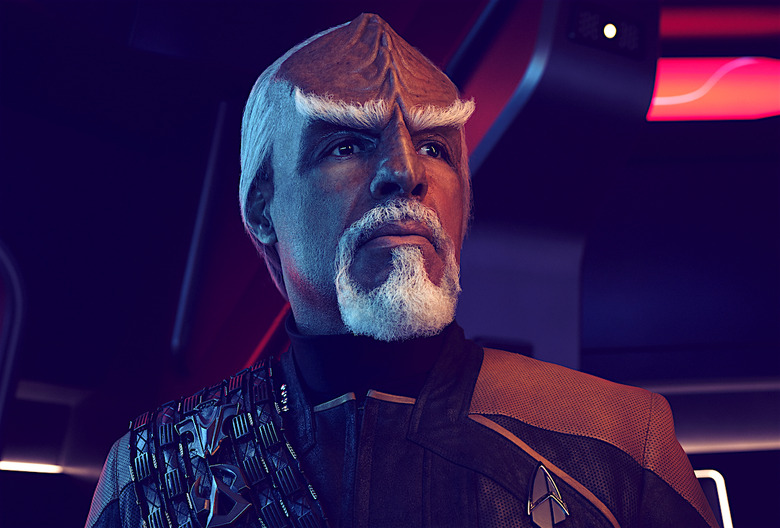
Worf in Star Trek Picard
While Dorn’s history with Star Trek is long and storied, Karim Diané’s history with the franchise is just beginning. He openly admits that he became a Star Trek fan only after being cast as Jay-Den Kraag, a Klingon refugee and soft-spoken cadet in Starfleet Academy. "They call me, they're like, 'Oh, you're gonna play a Klingon.' And I'm like, 'What are you? I don't know.' And they're like, 'Just go on Google and type in Klingon.' And [Dorn’s] face popped up, and I was like, 'Oh, shit.'"
While he may not have as many appearances as Dorn, Diané still holds his own distinction with Jay-Den as the first openly gay Klingon protrayed in Star Trek. Realizing the significance of this casting, the moment it truly sank in for Diané that he was on Star Trek was when he first saw himself in full Klingon costume and makeup in the mirror. He hopes that in the future, the gay Klingon character will be looked back on the way Nichelle Nichols is today — as a groundbreaking, iconic moment that was ahead of its time. "60 years from now, I hope that we look back at this moment and we're like, 'Wow, like that was really cool that they did a gay Klingon,'" Diané said.
Jay-Den's Queerness & Representation
"It's just like a fact about him, and it's not like a huge storyline,” Diané said about Jay-Den’s queerness. It's just like a part of who he is, and it's like it's cool, whatever." SFA’s season one episode “Vox in Excelso” was highlighted as a particularly nuanced, defining, and emotionally resonant moment for the character. In the episode we see Jay-Den in conflict with his parents: "It was really cool that we still got to see him kind of duking it out with his parents — not necessarily because he is queer, but because he's different."
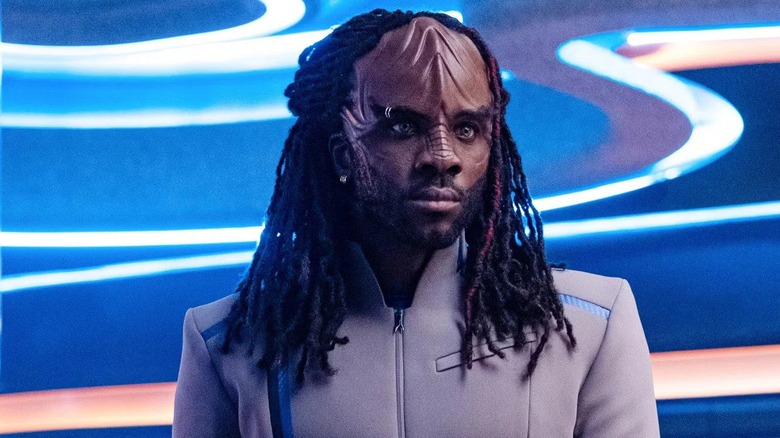
Jay'den Kraag in Starfleet Academy
The creative decision to normalize Jay-Den's queerness, rather than sensationalize it, was described by Diané as both intentional and impactful, as the character's journey mirrors the real-world experience of self-acceptance that many queer people navigate. Diané shared about some standout fan moments that signaled to him that this resonated with fans. One fan messaged him on social media and shared a photo of their latest tattoo, a large rendering of Jay-Den in a Speedo on their thigh, which Diané described as a surreal and unforgettable moment. Another fan interaction in Germany, however, reinforced the importance of the character for Diané: "A young trans boy came to my table in tears... they could barely speak English, but they mustered up the words, 'I love you.'... It solidified for me why Jay-Den matters and why I will never shut up about this gay Klingon."
Star Trek Pride Comic and SFA Season Two
As one of the newest members of the Star Trek universe, Diané has gone all in with Jay-Den, both on screen and in print. He was invited to write a story for the Star Trek Pride comic, which became Diané’s first published writing work. He described the creative brief as surprisingly open-ended: "I thought I was gonna have like a lot of rules on what I could do. They were like, 'Just write whatever you want.' I'm like, 'Whatever I want? Okay.'" Published earlier this year to coincide with Pride Month in June, the story focuses on Jay-Den and Kyle's blossoming romantic relationship, filling in backstory gaps from Season 1 and explaining why two characters from completely different worlds connect so well. Fans of Jay-Den and Kyle can enjoy the story as they patiently await season two of SF which, according to Diané, will feature significantly more of the Jay-Den and Kyle dynamic. "Kyle is in the second season for sure, and it's juicy. I can't wait."

Jay'den and Kyle in Starfleet Academy
Diané expressed immense gratitude for the creative freedom he’s been afforded with Star Trek and his character. "Star Trek is a gift that just keeps on giving. Like, I never in a million years... I've actually been writing on my own for years, and so for them to give me the opportunity to be a published writer for the first time is like so cool."
Michael Dorn's Independent Film Project
Diané is not the only member of Starfleet engaging in broader creative projects, as Dorn's own current passion project signals a broader appetite among Star Trek alumni to continue creating meaningful science fiction outside of the main franchise. Dorn wrote an original science fiction screenplay focused on character-driven storytelling. "I love science fiction, always have,” Dorn said. “And I felt there was always a place for just stories. Not so much special effects, but just stories." The film was produced in London, which Dorn noted was more cost-effective than producing in Los Angeles; and features an all-Star Trek alumni cast, including Michelle Hurd (PIC), Marina Sirtis (TNG, VOY, PIC), and Dominic Keating (ENT). Filming wrapped in February and March of this year; the project is currently being shopped to distributors, with a decision expected within the next couple of weeks.
Mentorship Between Worf & Jay-Den
Mentorship was one of the recurring themes during our conversations with the Star Trek cast, particularly as the franchise introduced new generations of characters and performers. When asked what advice Worf would have given to young Jay-den, Dorn’s answer was simple and personal: "Follow your heart. You know? Do what your heart tells you. You'll never go wrong."
For Diané, however, the mentorship he received was less about formal Klingon etiquette and more about human connection. Dorn reached out before Diané’s first Klingon makeup session, FaceTiming him to prepare him for the experience, including the realities of fan culture and the online response that comes with joining such a loved franchise.
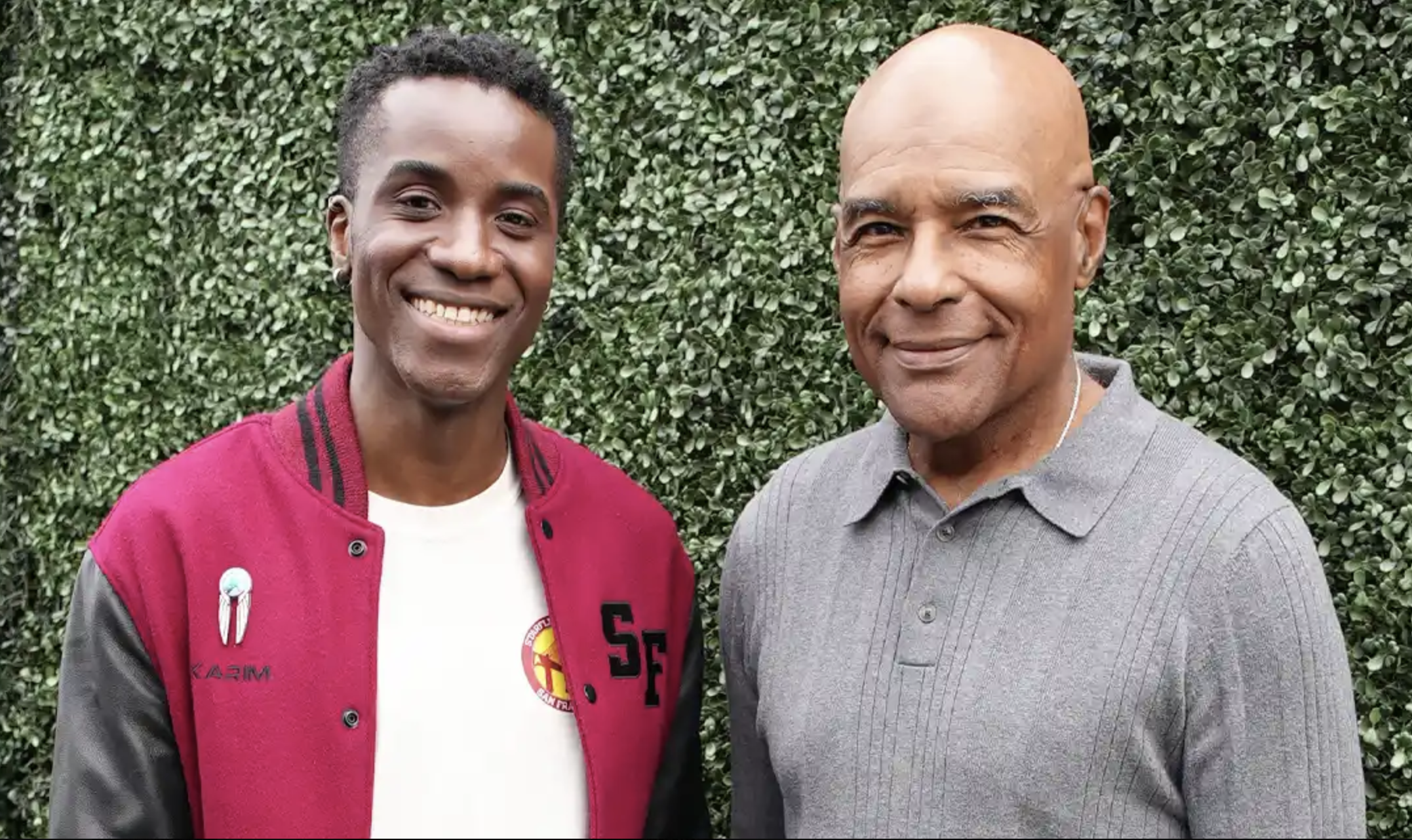
Photo Credit: Paramount+
The two also bonded immediately when they met at the Rose Bowl, sharing the experience of the demanding five-hour Klingon makeup process. Diané described Dorn’s support as something rare: the willingness to simply be available. "The mentorship from this man has been more so just like being a nice human being - and being open and receptive, giving me his phone number and saying, 'Hit me up any time that you need anything.' I think that goes the longest way, because that's not common, and it's not necessary."
For Dorn Starfleet Academy plays an important role in continuing the legacy of Star Trek. "With the advent of Starfleet Academy, I think it's a really good segue into the next sort of next generation."
Jerry O’Connell and Doug Jones
Character & Story Futures
With Star Trek: Discovery and Star Trek: Lower Decks having reached their conclusions, Doug Jones and Jerry O'Connell looked back on the journeys of Saru and Jack Ransom while imagining where those characters could go next.
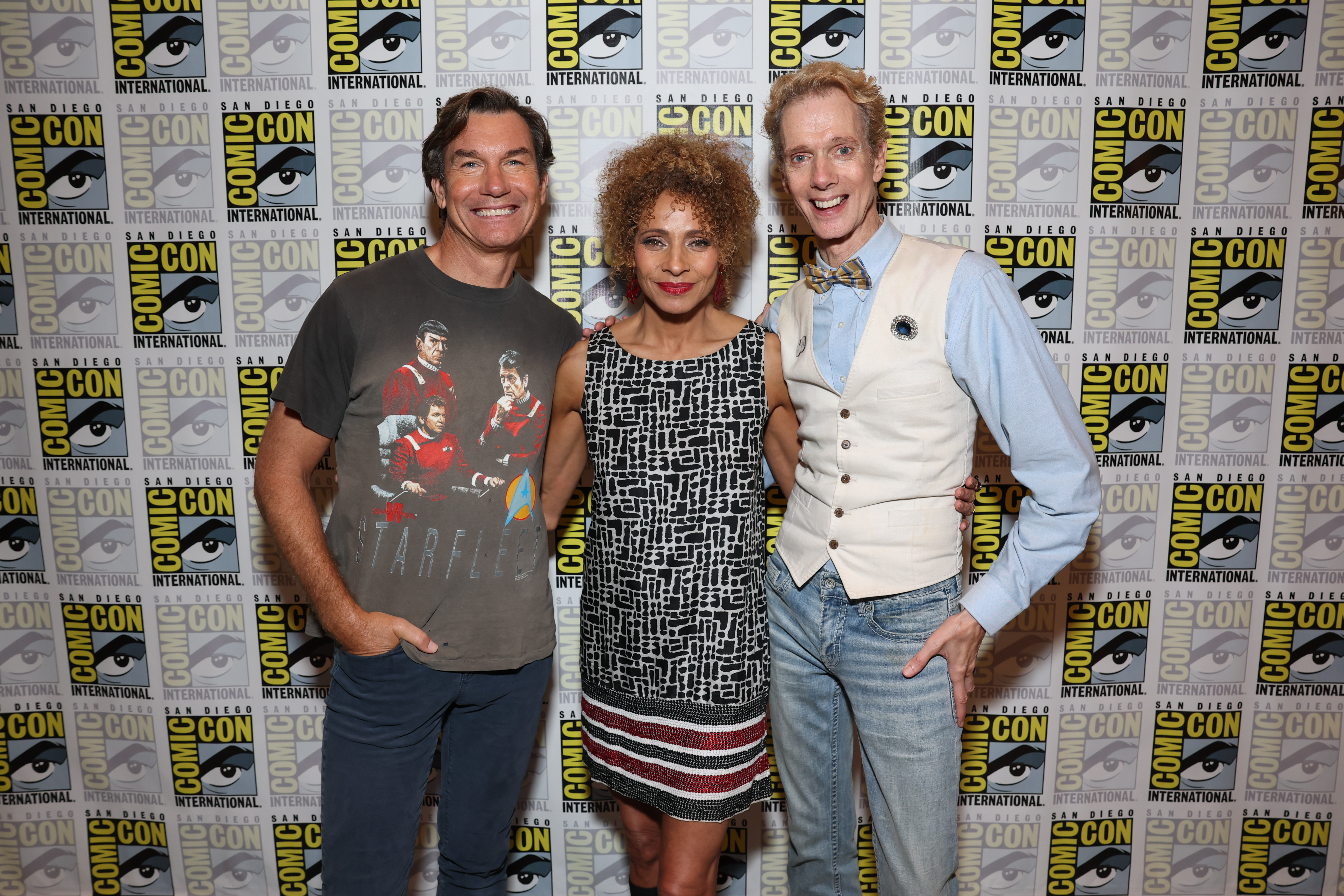
Photo Credit: Todd Williamson/January Images for CBS/Paramount+
Author's Note: You'll spot the wonderful Michelle Hurd in the roundtable photo! Unfortunately, scheduling meant she wasn't able to join us for the interview, so we didn't have the chance to include her in this conversation. We hope to catch up with her soon and look forward to sharing that interview when it happens!
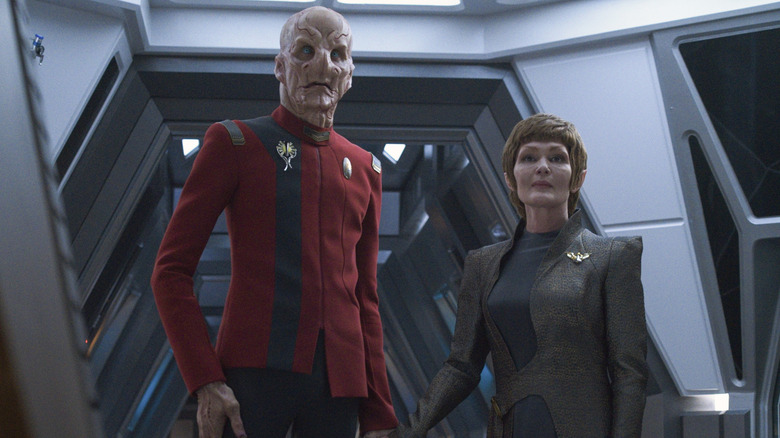
For Doug Jones, Saru’s journey on Star Trek: Discovery concluded with the character becoming an ambassador and marrying President T’Rina of Ni’Var, a storyline the actor found deeply satisfying. When asked where he would like to see Saru go next, Jones imagined a future that continued the character’s diplomatic path. "I'd like to see them maybe vacationing on her planet while doing guest speaking at the academy here and there." Jones describes the relationship between Saru and T’Rina as a natural pairing. Both characters share qualities including poise, diplomacy, and a strong sense of duty, and their relationship represented a first love for both characters.
Saru and President T'Rina in Star Trek Discovery
For Jerry O’Connell, Jack Ransom’s future possibilities begin with his character’s new position as a captain following the events of Star Trek: Lower Decks. O’Connell shared one storyline he would like to explore: having Ransom command a ship where Rebecca Romijn’s Una Chin-Riley serves under him. "I would love to, at some point, captain my wife's character, Una Chin-Riley - where my wife has to serve under my captainship." When asked which kind of captain Jack Ransom would be, O’Connell answered without missing a beat : a Riker-style captain.
The Legacy of Star Trek
Both actors emphasized that Star Trek does not truly end when a series concludes. The franchise and its characters continue through fan engagement, conventions, and audiences returning to the stories. Jones shared that fans often tell him how Saru’s journey from fear to courage helped him work through his own anxiety. The character’s evolution from a fear-driven prey species into a confident ambassador resonated with himself as he saw parts of his own struggles reflected in Saru. "I live with my own anxiety and my own fears every day. And so going on the journey with him into a place of confidence was like, 'Oh gosh, well, if Saru can do it, so can I, dagnabbit.' Fans continuously revisiting the series helps drive the legacy of those characters. “I hear constantly ‘I just re-watched Discovery,' . So it's very much alive and present for them still."
On the significance of becoming part of the Star Trek legacy through Star Trek: Lower Decks, Jerry O’Connell confesses : "I don't think I realized when I started working on Lower Decks that I was part of something just really bigger than myself - not even entertainment history, not even TV history, like, history history."

But when attending the 60th anniversary celebration alongside Star Trek legends including George Takei and Michael Dorn, O’Connell appreciated truly the scale and cultural importance of the franchise. Rather than seeing the conclusion of Lower Decks as an ending, he saw it as part of a larger continuing legacy. "When you're a part of Starfleet, your service never ends."
Looking toward the future of Star Trek, Jones said he hopes the franchise continues carrying the message of optimism that has defined it for decades. "I hope that the word hope is still prevalent, and still the reason for this whole franchise in the first place - hope for a future where we all get along, hope for a future where conflict is solved with diplomacy." To what O’Connell added that he hopes to still be around to celebrate the franchise’s 100th anniversary (don’t we all?!)
Behind the Scenes: Saying Goodbye to Saru
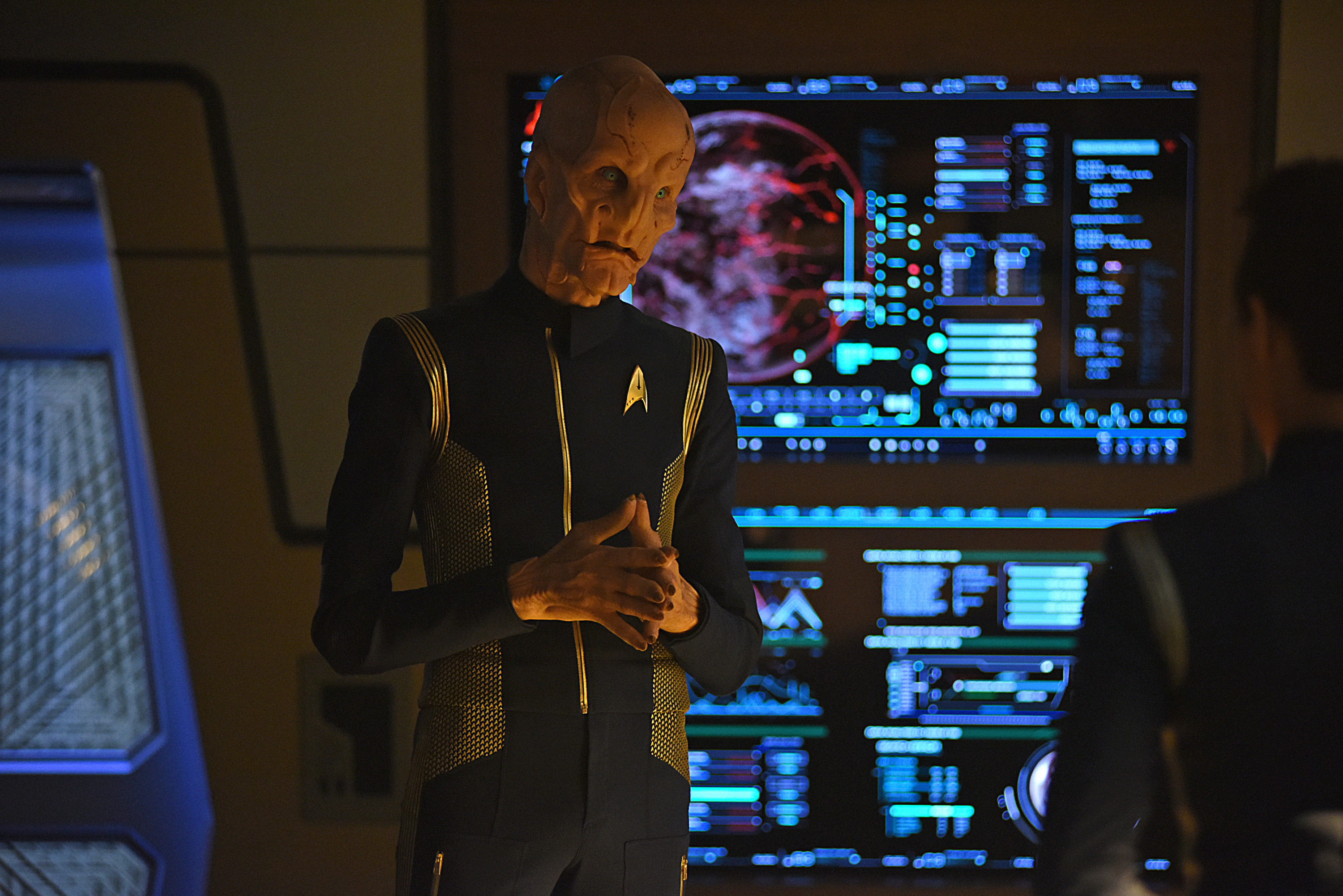
The Saru prosthetic makeup throughout all five seasons of Star Trek: Discovery was without a doubt, one of Doug Jones’ great feat of acting. The final removal of the prosthetic was filmed and will appear in his upcoming documentary, Getting Doug Jones. The moment was made even more memorable when Whitney Houston’s “I Will Always Love You” began playing in the makeup trailer. "I held it on my hand, and Whitney was singing 'I Will Always Love You.' Are you kidding me? Could there be a more perfect moment? So I'm sitting there looking at Saru going, 'And I will always love you.'" (The production team is currently seeking rights to include the Whitney Houston song in the documentary.) Jones noted that he has since moved toward more human roles, though he remains open to future prosthetic work under the right circumstances.
Saru in DSC Photo Cr: John Medland/CBS ©2018 CBS Interactive, Inc.
Personal Memories of Star Trek
The actors shared personal how Star Trek became part of their daily lives. O’Connell spoke about his family’s connection to Strange New Worlds, describing Rebecca Romijn’s casting in the franchise as making Star Trek a family affair. He also shared that his five-year-old niece had started watching Strange New Worlds and quickly became engaged with the series, although one scary scene (The Griffin Incident we suppose!!) led her to take a break.
Doug Jones recalled that his earliest memories of Star Trek was watching The Trouble with Tribbles at age six in Indianapolis. For O’Connell it was his vivid memory of Khan’s detonator device from Star Trek II: The Wrath of Khan : "Every day - if you're ever on a New York subway and you look at the floor, there is a chrome disk on the floors of subways. I don't know what the purpose is, but it looks like that thing that Khan is twisting to... it's the detonator, right?"
But in the end, for Jones, his most formative Star Trek experience remains Saru’s own journey. "I live with my own anxiety and my own fears every day. And so going on the journey with him into a place of confidence was like, 'Oh gosh, well, if Saru can do it, so can I, dang it.'
ROBERT PICARDO, CIRROC LOFTON, & DOMINIC KEATING
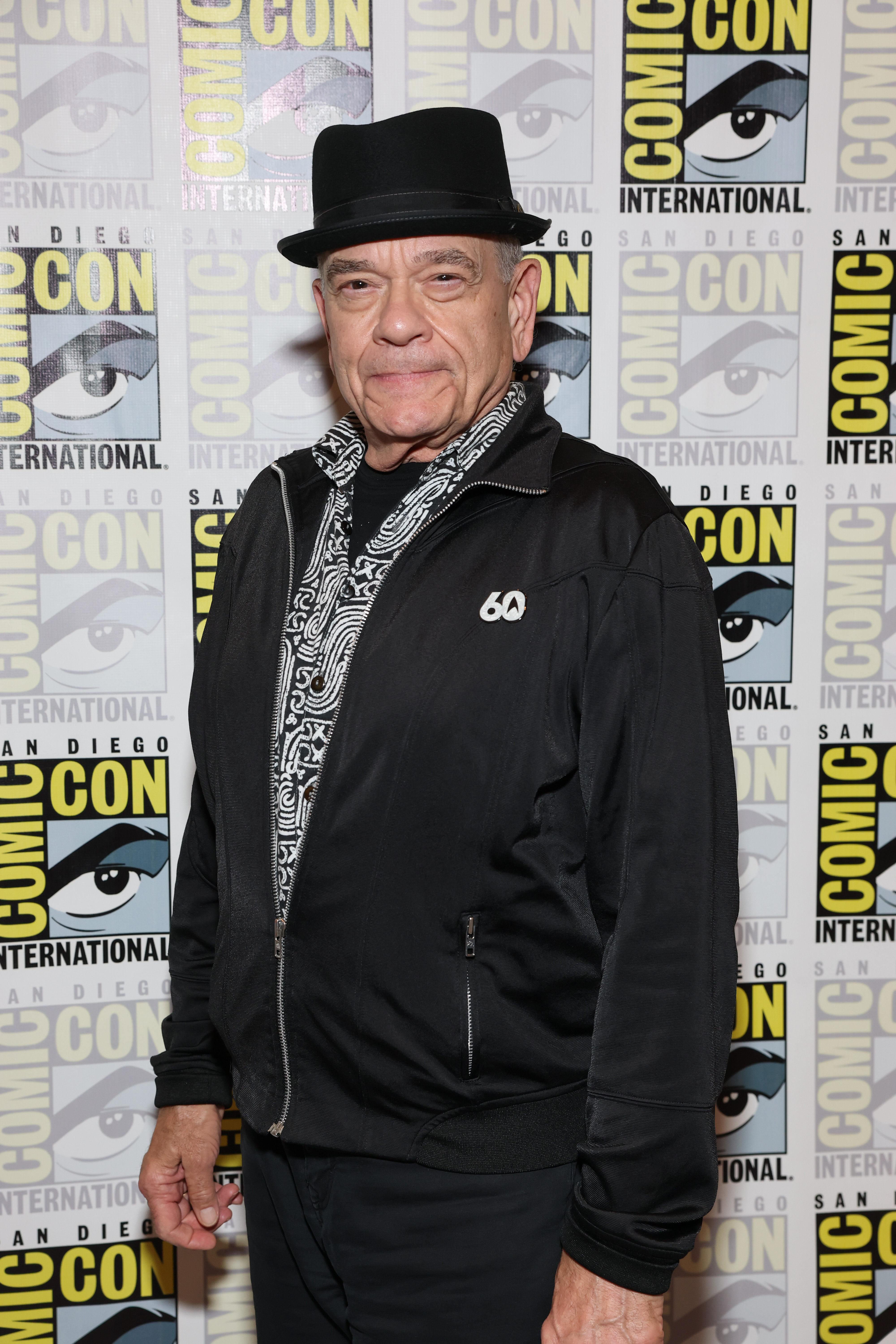
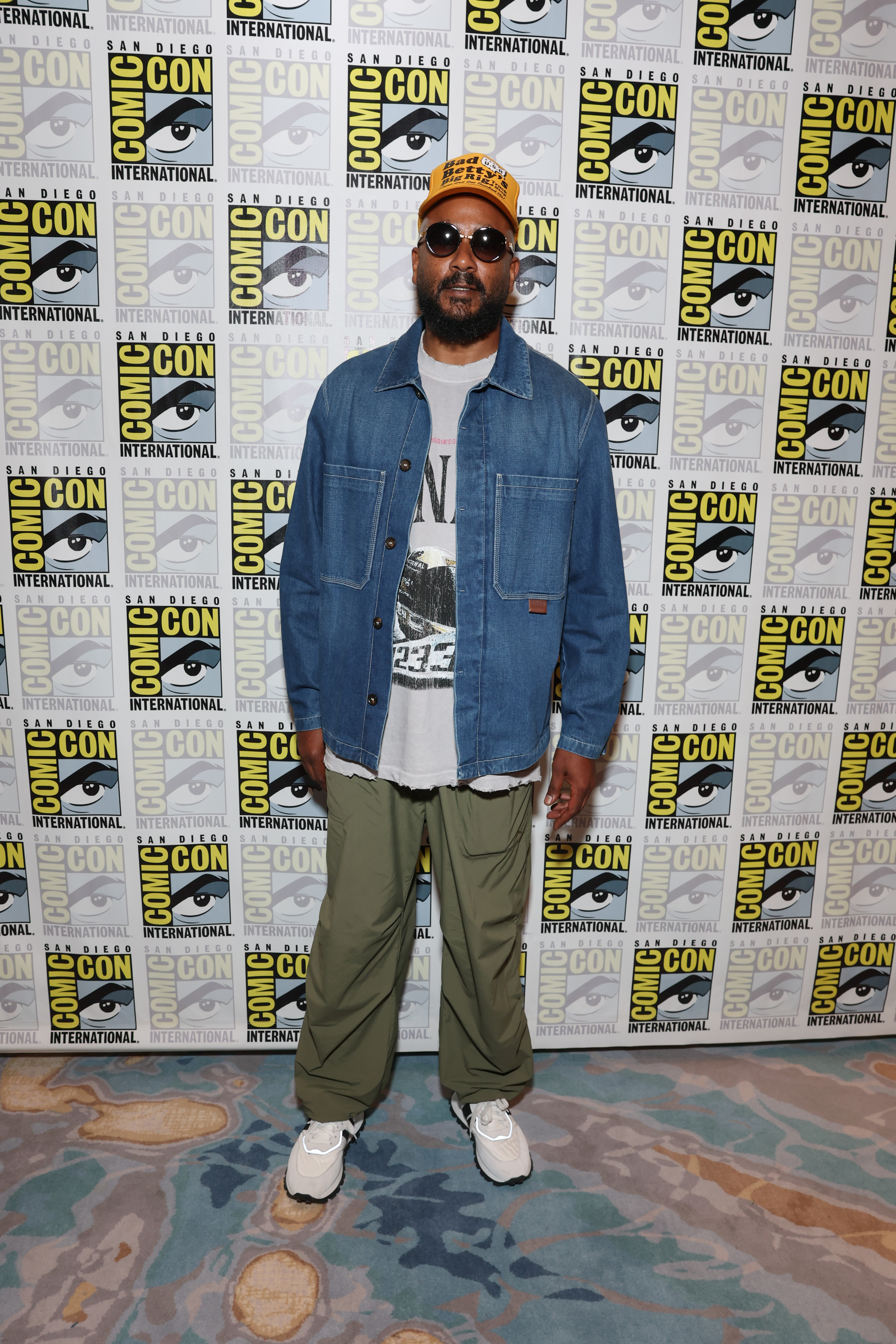
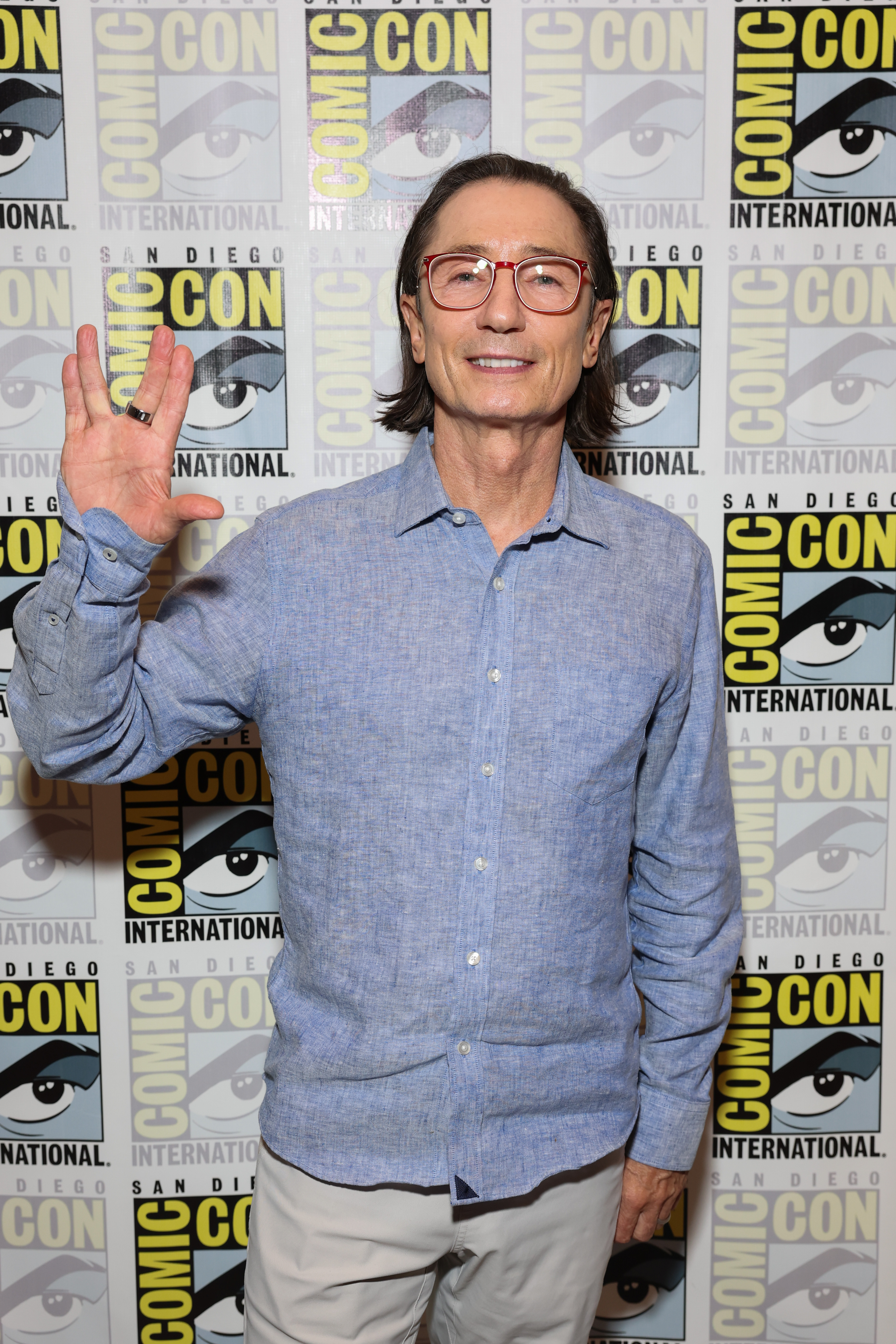
Photo Credit: Todd Williamson/January Images for CBS/Paramount+
From artificial intelligence and mentorship to performance, representation, and the enduring appeal of Star Trek, Robert Picardo (Star Trek Voyager, Star Trek Prodigy, Starfleet Academy), Cirroc Lofton (Star Trek Deep Space Nine, Starfleet Academy), and Dominic Keating (Star Trek Enterprise) covered a wide range of topics during their conversation. Looking back on their own series while discussing Starfleet Academy, the three actors reflected on how the franchise continues to evolve while remaining rooted in the values that have defined it for six decades.
The Doctor as a Pioneering AI Character
For Robert Picardo, the return of the Doctor in Starfleet Academy provided him with an opportunity to revisit a character who was already exploring questions about artificial intelligence long before AI became a major part of everyday cultural conversations. Picardo described the Emergency Medical Hologram as a groundbreaking character within the Star Trek universe.

The Doctor in SFA - Photo Credit: Miller Mobley/Paramount+
While the Doctor initially struggled with self-centered emotional responses, the character gradually evolved into someone who sought to expand his capabilities for the benefit of others. "He was groundbreaking as an artificial intelligence in that respect. He had different capabilities, and now that artificial intelligence is all the rage in every discussion you have, I think that I was forward-looking 30 years ago to be a medical hologram."
The Doctor’s Role in Starfleet Academy
Picardo revealed that The Doctor will have an even more expanded role in Season 2 of Starfleet Academy. During this season, he will develop a close mentoring relationship with Karim Diané’s Jay-Den, as the Klingon wants to become a healer rather than a warrior. The two will also be at the center of a major medical storyline. "We develop a very close mentoring relationship. We have a big medical thriller, a big medical disaster thriller, that's very exciting and very well shot, and he and I have quite a bit to do together in that."
The conversation returned to the idea of mentorship through the relationships between returning characters and the next generation of Starfleet Academy students.
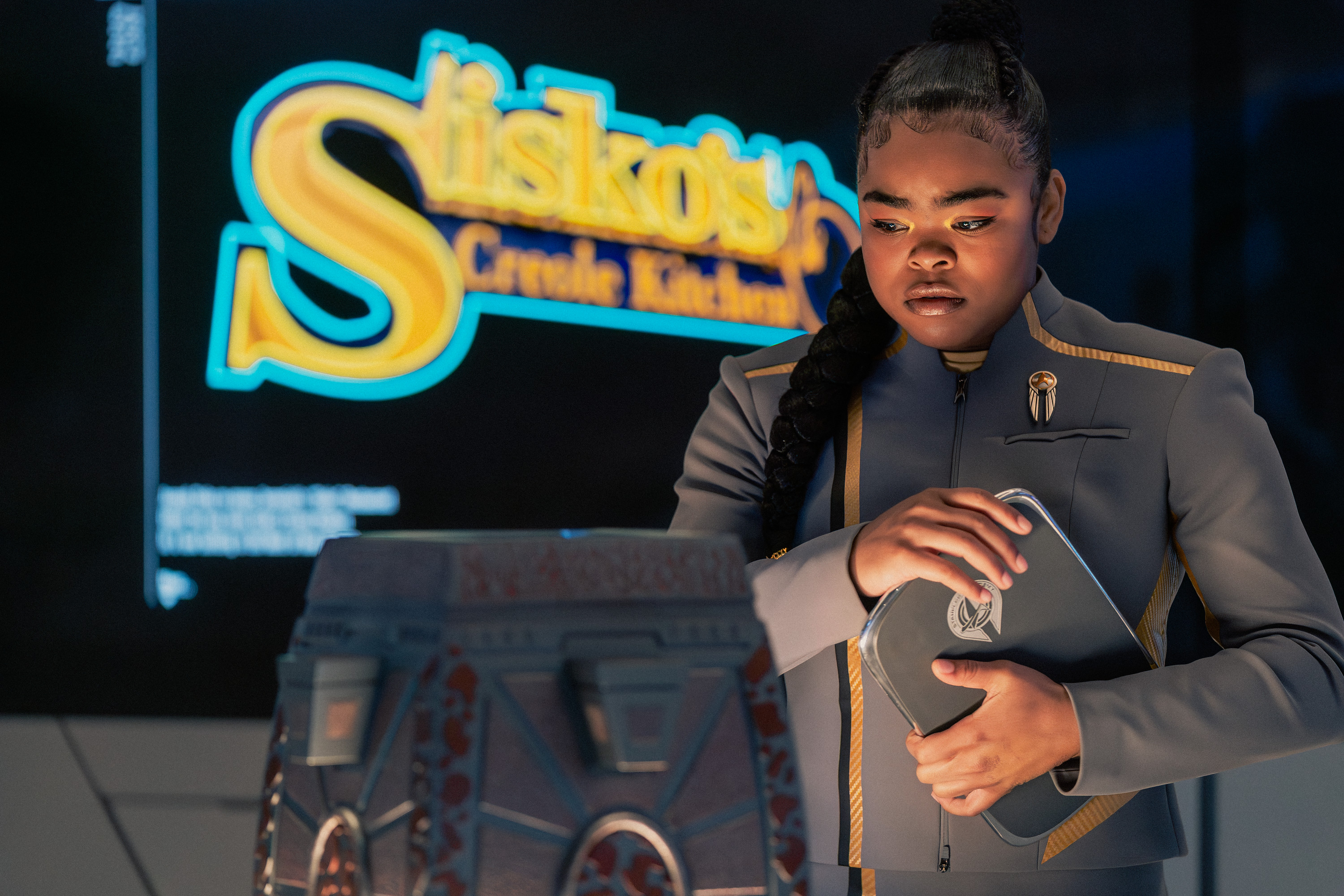
SAM in SFA - Photo Credit: Paramount+
When asked about revisiting Jake Sisko as a mentor to SAM, played by Kerrice Brooks, Lofton described the opportunity as a chance to honor Avery Brooks and his contribution to Star Trek. Before moving forward with the role, Lofton spoke with Mr. Brooks and received his blessing. "I had a discussion with Mr. Brooks about the possibility of doing it, and when he had his blessings on it, it was something that I knew was gonna be something special." Lofton praised and credited Tawny Newsome for making the collaboration possible and expressed gratitude to Alex Kurtzman and Noga Landau for their support.
Picardo discussed the creative choice to make the Doctor the adoptive father of SAM, a young Black woman. "I also thought that it's great that an old white dude has this beautiful, vibrant, you know, Black daughter - I thought was about the coolest thing ever." They both praised Kerrice Brooks as an actor, describing her as exceptionally present and emotionally responsive on set.
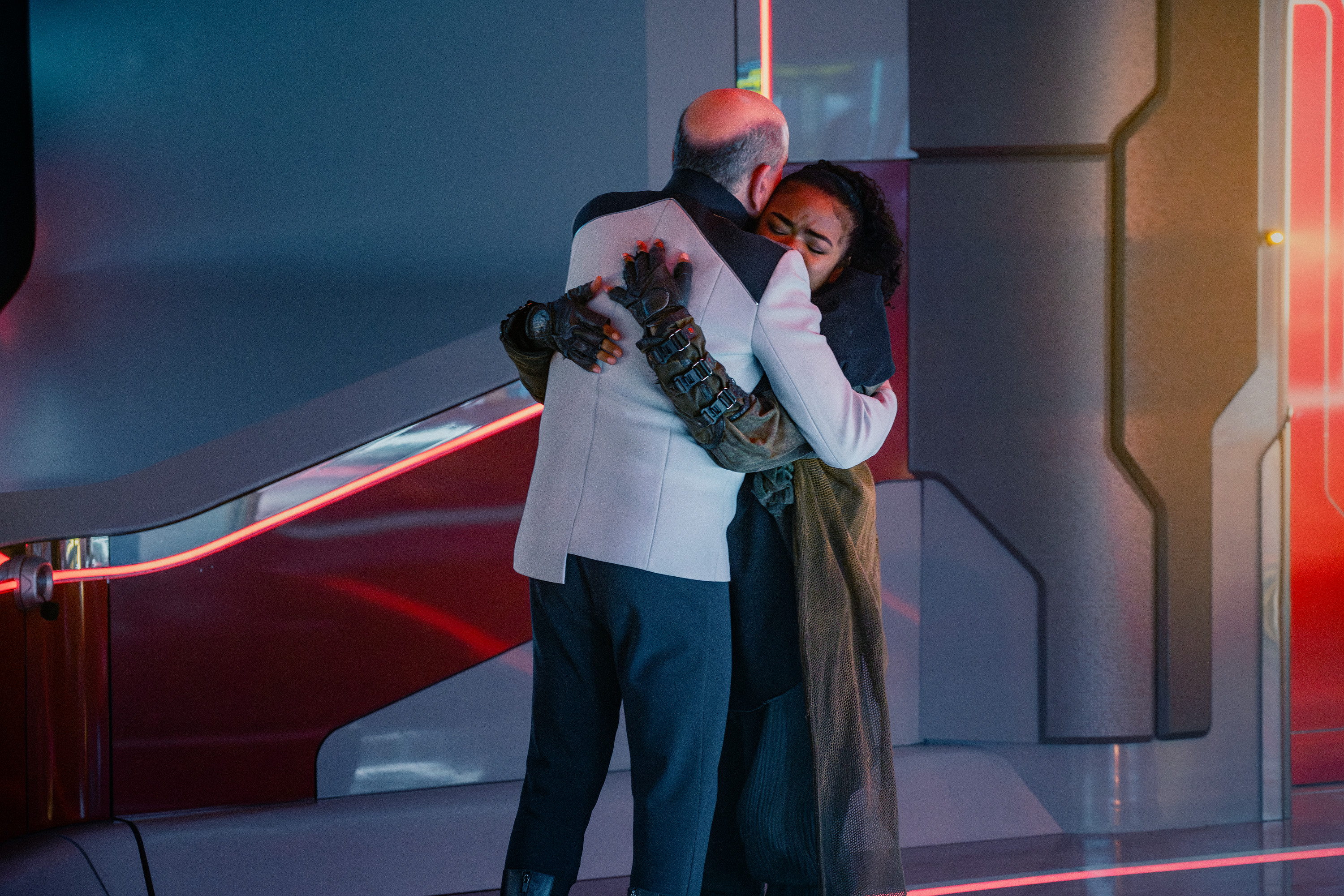
the Doctor and Sam in SFA - Photo Credit: Michael Gibson/Paramount+
This pairing was a way to revisit an idea first explored in the Voyager episode “Real Life”: the impact of having perfect digital memory. An AI character does not experience memories fading or becoming easier to process over time. Painful experiences remain fully accessible, requiring active confrontation rather than natural emotional distance. "... If you have perfect digital memory, memories don't fade. They don't get milder. A painful memory doesn't - you don't assimilate it, and it gets gentler with the passage of time, because my memory doesn't diminish after 800 years."
What 60 Years of Star Trek Means
According to Lofton, Star Trek remains one of the greatest science fiction franchises because it has continued to resonate across different political eras and cultural moments. He compared its impact to artists like the Beatles and Bob Marley, noting themes remain connected to universal ideas. "Star Trek is timeless on that same spectrum, because it resonates with us to challenge us to problem solve, to critical think, to build friendships, to build alliances, to explore, and ultimately to be ourselves and work together on common interests, common good, common benefit."
For Picardo it’s the franchise’s ability to bring generations together. Although he had not watched Star Trek before being cast on Voyager, he has since embraced it entirely. "What other show has generations sitting together watching it? That if you as a parent, if you wanna share your optimism for the future with your child, you sit down and watch Star Trek when they're three and four years old."
For Keating, it is the ever changing perception of Star Trek: Enterprise. Once considered the franchise’s overlooked entry, the series has gained greater appreciation over time. "We were the ginger-headed stepchild for quite a long time... but that has all changed. And I'm very, we're very, very happy." He also emphasized the importance of representation throughout the franchise and how that has remained one of Star Trek’s strengths.
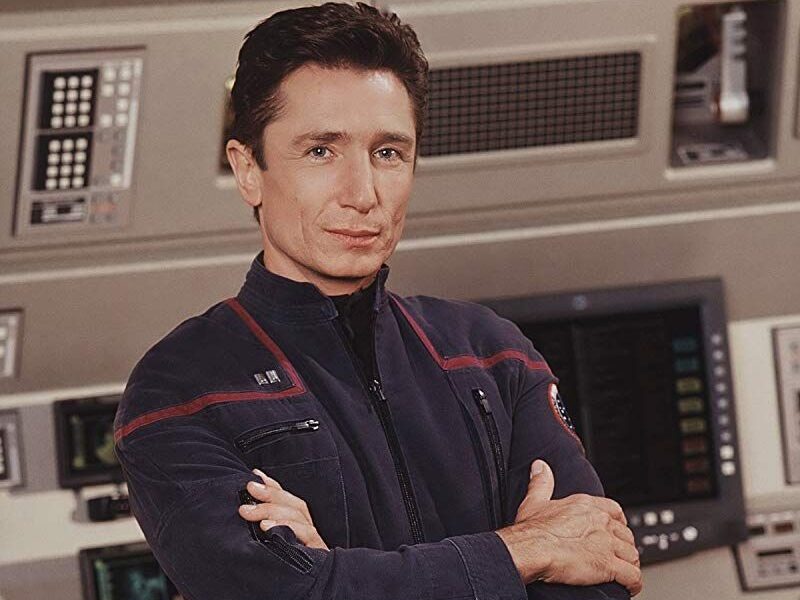
Malcom Reed in Star Trek Enterprise
Favorite Episodes Across the Franchise
If you have spent enough time reading Star Trek interviews, you know that one question inevitably appears: “What is your favorite episode?” In the fandom, it has become something of a Rorschach test, revealing what each person connects with most deeply in the franchise.
Keating highlighted Enterprise episodes “Similitude” and “Shuttlepod One,” with the latter standing out as one of his favorite moments from the series. "Shuttlepod One on our show, the Deep End I did with Connor [Trinneer] ]in space, thinking that we're hurtling to our death in the shuttlepod. That really, that was a crowning moment for me."
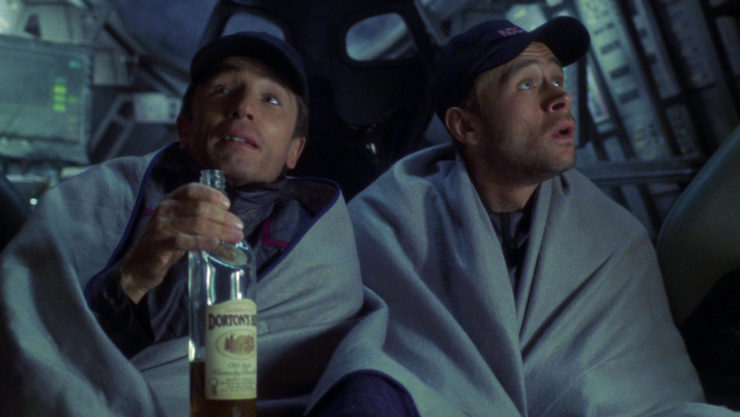
Malcom Reed and Trip Tucker in Shuttle Pod One Star Trek Enterprise
Picardo named The Original Series episode “City on the Edge of Forever” and The Next Generation episode “Darmok” among his franchise favorites. He also spoke of Voyager’s “Real Life” as his personal favorite for The Doctor, noting its exploration of family, loss, and grief. "Because the program is random and my daughter dies unexpectedly, and then the character has to deal with the painful memory. And when we played upon it again in the first season of Starfleet Academy, it showed that if you have perfect digital memory, memories don't fade."
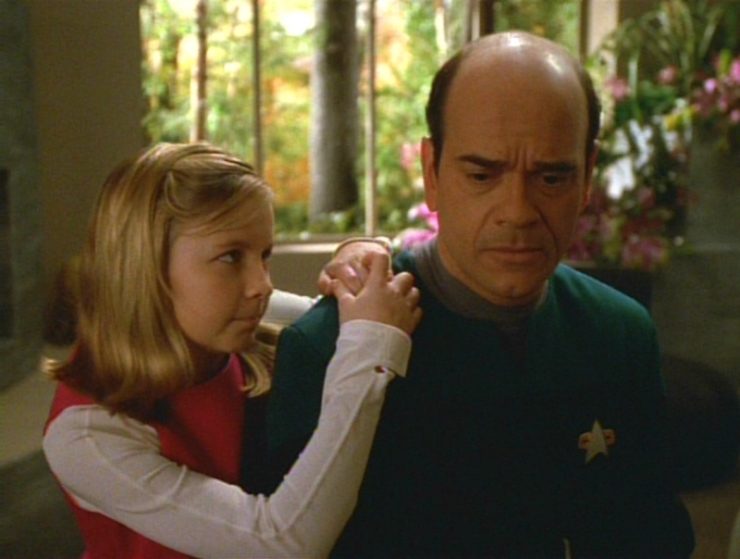
The Doctor and his daughter in Real Life - Star Trek Voyager
Lofton chose Deep Space Nine’s “Far Beyond the Stars,” directed by and starring Avery Brooks, as one of his most important episodes. He highlighted the episode’s ability to communicate its message even to viewers unfamiliar with Star Trek. "Far Beyond the Stars - it's an episode I feel that you could watch it if you don't know anything about any character, and you don't know anything about Star Trek. You can just watch it and still identify with the message that it's trying to convey." He finished by praising “In the Pale Moonlight” for Avery Brooks’ performance and “The Inner Light” for its emotional depth.
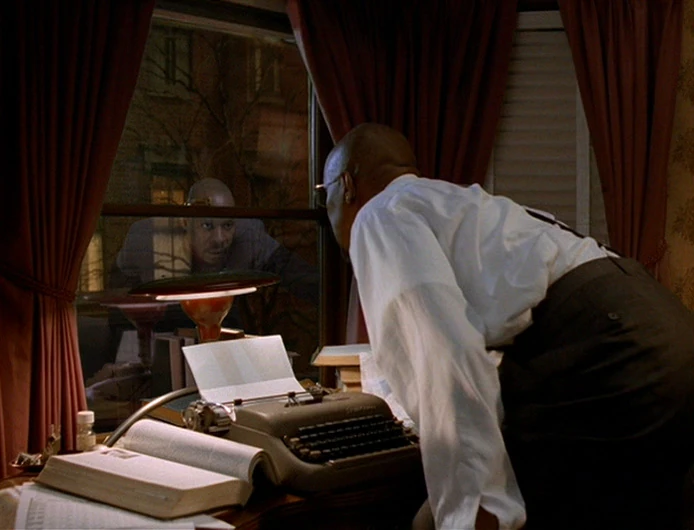
Captain Sisko / Benny Russell in Far Beyons the Stars - Star Trek DS9
Craft and Intentionality in Performance
Intentional character work in science fiction was something Lofton emphasized. He spoke about teaching a course at Stanford on Deep Space Nine, using The Radical Geographies of Deep Space Nine by David Sites, and how that experience deepened his appreciation for the craftsmanship behind science fiction world-building. He emphasized that actors should not only understand the world of a series but also create their character’s inner world, making deliberate choices about details connected to background, culture, and identity.
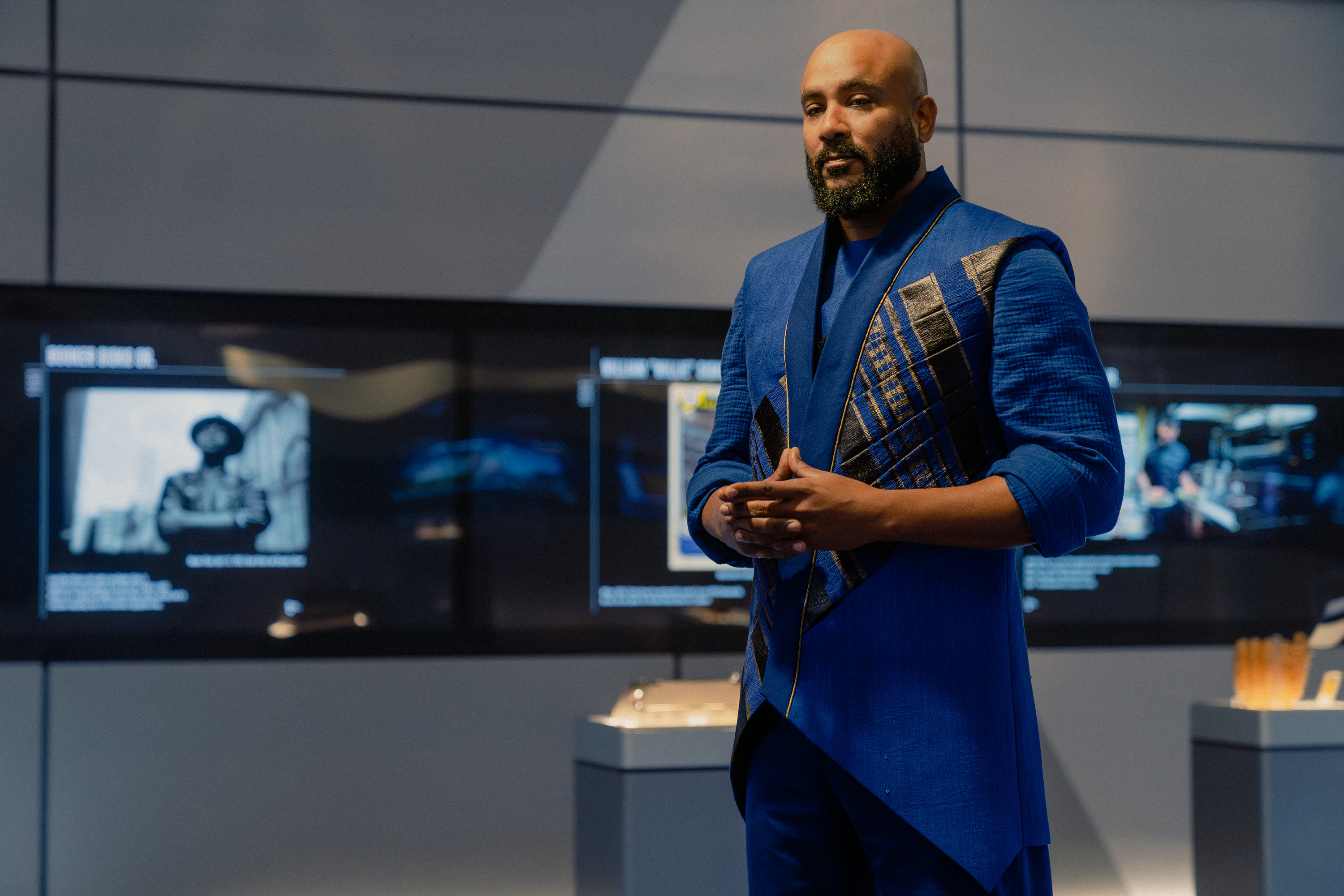
Cirroc Lofton as Jake Sisko in Starfleet Academy - Photo Credit: Paramount+
He then expanded on Avery Brooks’ approach to character creation. Brooks incorporated meaningful details into Benny Russell’s environment in Far Beyond The Stars, including a piano in the kitchen like Thelonious Monk, a door frame designed from the Dogon tribe, and specific clothing choices that reflected Black culture in the 1950s setting. "Be intentional about the details when you're performing and think about what kind of thing do I wanna reflect? From my perspective, it was about my Ethiopian heritage, and I took upon some of the African artwork that Sisko used in his quarters and said, 'How can I bring that forward?'
ROD RODDENBERRY
As the son of Star Trek creator Gene Roddenberry, Rod Roddenberry occupies a unique place within the franchise's 60 years of history. Reflecting on the longevity of Star Trek, he discussed the philosophy that continues to define the series, the importance of preserving its legacy for future generations, and his hopes for where the franchise goes next.
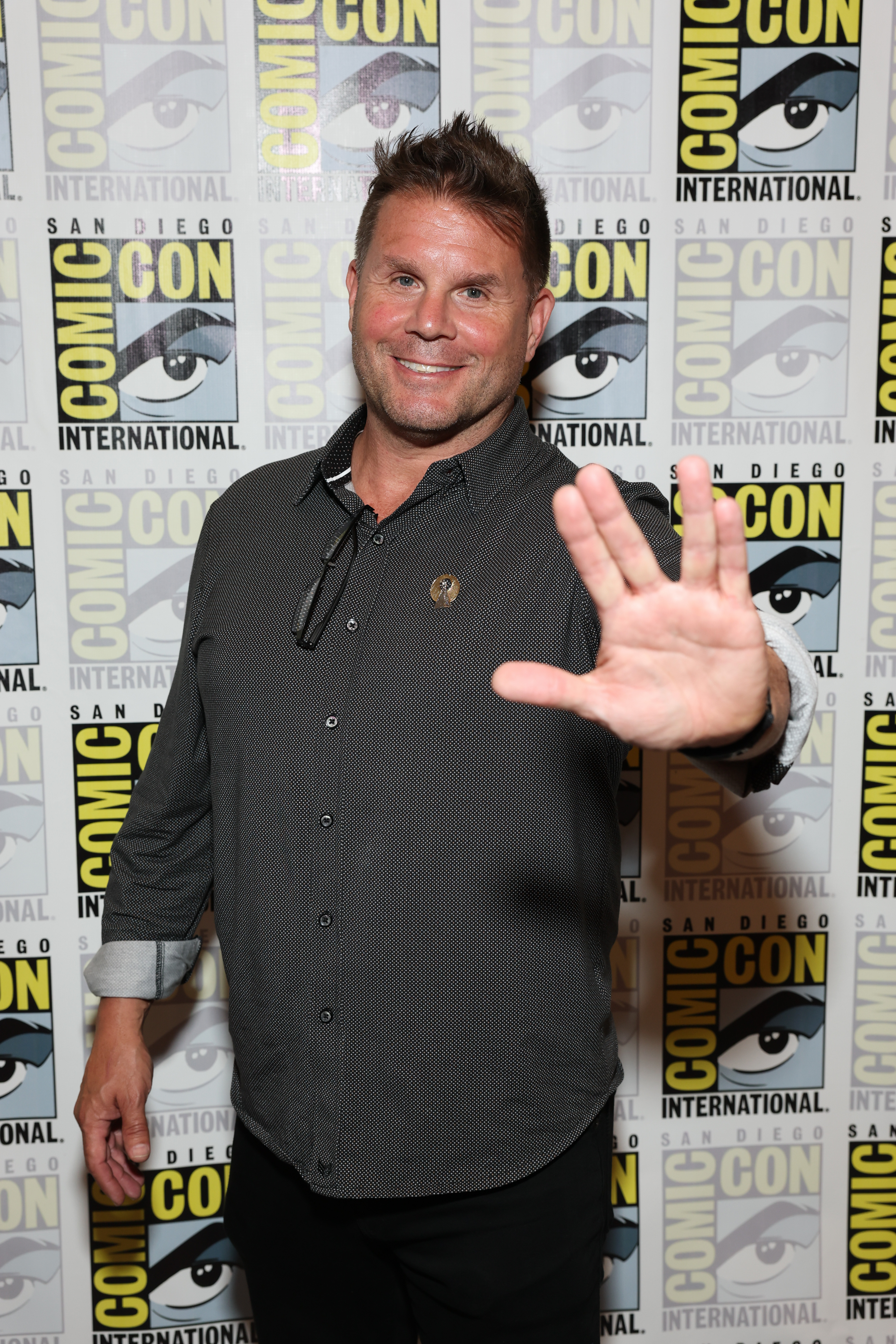
Rod Roddenberry - Photo Credit: Todd Williamson/January Images for CBS/Paramount+
Star Trek Philosophy and Cultural Impact
For Roddenberry, one of the defining principles of Star Trek remains IDIC. He described it as central to understanding what makes something truly "Star Trek-y." The strength of the franchise, he explained, comes from its ability to present different perspectives and encourage empathy, even when characters or audiences do not necessarily agree. Star Trek imagines a future where identity markers such as race and sexual orientation are no longer sources of division or conflict.
He referenced Nichelle Nichols’ story about Martin Luther King Jr. and her role as Uhura as an example of the franchise’s cultural importance and spoke of Gene Roddenberry’s approach to LGBTQ+ representation. Rather than explicitly labeling characters, his father envisioned a future where love itself was treated as a non-issue. Roddenberry said that he initially viewed that approach as a “cop-out,” but over time came to appreciate the idea behind it. "There's tons of them on there. It's a non-issue. No one needs to walk around with a rainbow flag. It doesn't matter what your orientation is... There's tons of gay people on Star Trek. It's just - that's a future where love is love."
Star Trek and the Current Political Moment
When asked what is the role of Star Trek in today’s political climate, he acknowledged the difficulty of the current moment but said he finds hope in the community of fans who continue to believe in the franchise’s vision of a collaborative future. He acknowledged the challenge of engaging with opposing viewpoints and emphasized the importance of empathy, even when agreement is not possible. "There's a whole other point of view that I may not agree with, that I don't agree with, but I have to be somehow partially open to hearing it and try to understand it."
He connected that idea directly to the values at the heart of Star Trek: attempting to understand others and recognizing that people often act based on what they believe will create a better future. "Whatever side they're on, they're doing it because they think that's the right way to get to the future, to a better future."
This is maybe why, when asked which episode was his favorite, Roddenberry immediately answered “The Devil in the Dark” from The Original Series. This episode embodies for him one of the most important elements of Star Trek: the ability to challenge an audience’s assumptions and reconsider who the real threat is. "We end up being the devil in the dark, the humans. We're killing its children. It's a mother protecting its young."
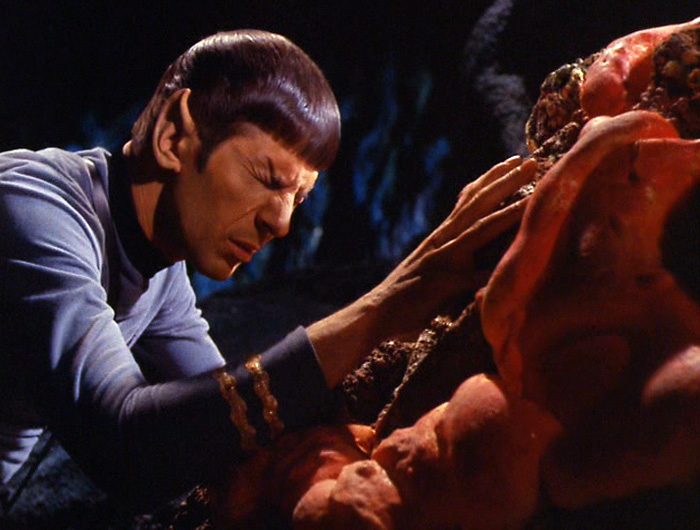
Spock in Devil in the Dark - Star Trek The Original Series
He described the episode as a turning point in understanding what makes Star Trek different from other television shows. "Any Star Trek that can make you think or see the other point of view - you don't have to agree with it, but if it makes you see the other point of view and empathize with it, that's the best Star Trek. That's the best storytelling out there."
Personal Memorabilia and Star Trek Preservation
Roddenberry, who was carrying an original script with his mother’s notes (Majel Barrett), was asked about his personal connection to Star Trek memorabilia, including recently acquiring the lost 33-inch model of the original Enterprise that was exhibited at The Lodge during SDCC. Another personal tribute to the franchise can be found at his home: the IDIC symbol is stamped into his driveway, visible only from a satellite view.

33-inch Enterprise model at The Lodge / SDCC
Preserving Star Trek history has become one of his major focuses. The Roddenberry family has preserved a large collection of documents, scripts, and call sheets, with plans to make them available digitally through the Roddenberry Foundation. The physical and digital preservation effort is being led by OTOY, which is scanning props and digitally rebuilding sets. One of the major projects is a life-size, one-to-one digital recreation of the Enterprise from Star Trek: The Motion Picture, allowing users to explore the ship through VR/XR.
Roddenberry explained why this project is significant: many Star Trek sets were only filmed from specific angles, meaning entire sections of locations were never shown on screen. "You never saw the other side of the room." Consultants including Denise Okuda, Michael Okuda, and Doug Drexler were brought in to help design areas of the ship that were never seen.

Photo Credit: The Roddenberry Archive
As of today there is no dedicated permanent Star Trek museum. When asked where the 33-inch Enterprise model will be shown to the public, he hinted to eventually have it become part of a museum collection. He suggested the Lucas Museum of Narrative Art as one possible location, expressing interest in the symbolism of a Star Trek artifact existing alongside other forms of storytelling history. "Having the contrast of a Star Trek ship in a Lucas place - that almost has a working together joint symbolism to it, and I love that."
Rod Roddenberry’s Vision for the Future of Star Trek
Roddenberry declined to share specifics about next potential Star Trek series or movies due to limited knowledge and studio sensitivity. However, he expressed confidence that the studio understands the responsibility of continuing the franchise. Looking at the future of Star Trek more broadly, Roddenberry said he believes the franchise could benefit from returning to its foundational elements. "I kinda think we need to go back to basics a little bit. The crew on a ship exploring and discovering."
He wishes for Star Trek to keep connecting to that idea of humanity more broadly, "If we keep fighting or not loving and arguing, we're gonna stay right where we are, and maybe take some steps backwards. What else is the point to life?", and to keep following his father’s belief that the universe provides endless possibilities for storytelling. "It's the galaxy - there are infinite stories to tell."
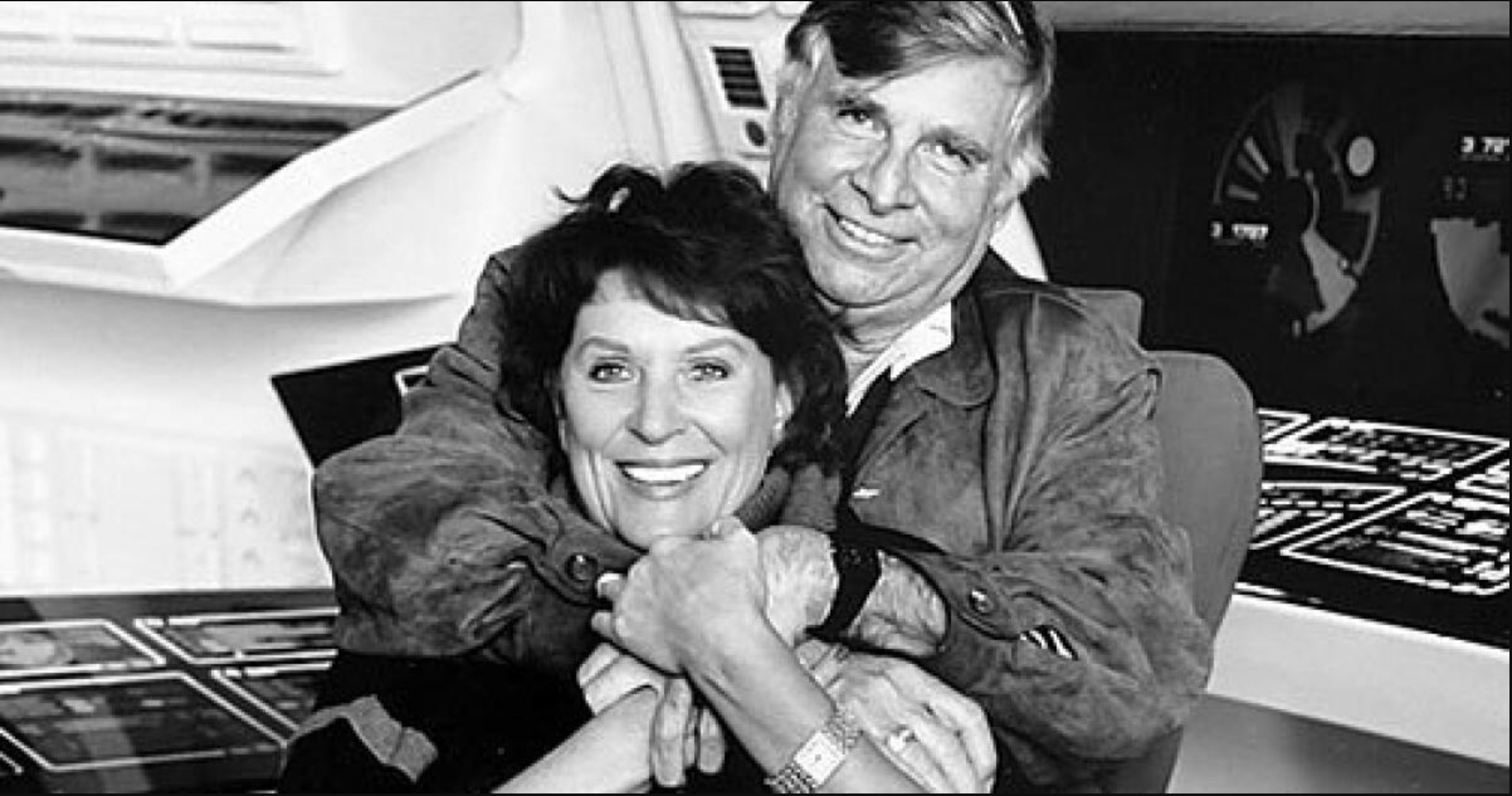
Majel Barrett and Gene Roddenberry
However he also emphasized that he has never attempted to replicate his father’s role or become another Gene Roddenberry. Instead, he has focused on creating his own path. "I never wanted to be Gene Roddenberry. I've never tried to be, but I did feel the weight sometimes, and I did feel like when I was younger, I lived in the shadow a bit. But I've stepped out, and I'm doing things my own way."
When asked about his own legacy, Roddenberry pointed not to future Star Trek productions but to his son. "My son's my legacy, and he takes after his grandfather. He's only 12, but loves math, reading, he contemplates the world, interested in physics, and he thinks about social issues at that age. And that took me probably 25 years before I started thinking that way."
He finally highlighted the work of the Roddenberry Foundation, which supports individuals working toward what he described as a "Star Trek future." "The foundation finds people out there who are working towards that Star Trek future. So very proud of that as well."
After 60 years, Star Trek remains a franchise built on connection: between generations, between characters, and between the people who create it and the fans who keep it alive. From its legacy characters to its newest voices, the journey continues with the same enduring message at its core: hope for the future. Thank you to Paramount/CBS for giving Strange New Pod the opportunity to conduct those interviews.
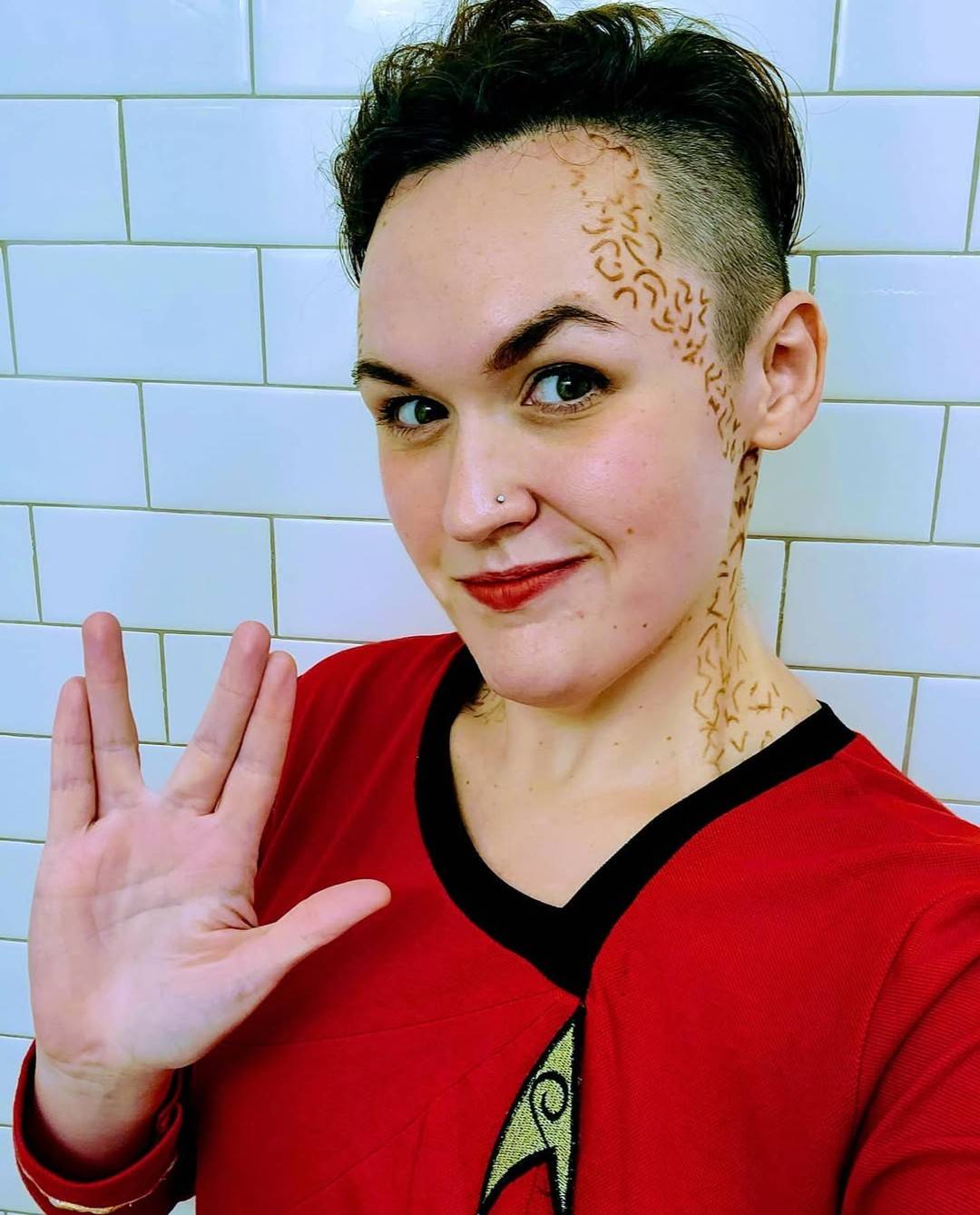
Writer & Contributor
Karen Nelvana is a writer, artist, STEAM education advocate, and second-generation Trekkie hailing from Philadelphia. She credits Star Trek with helping shape her worldview and passion for activism, and loves analyzing science fiction through an intersectional lens. When she's not digging around in nebulae looking for coffee, Karen spends her free time curating her eclectic wardrobe, reading sci-fi comics, and galavanting around Philly's art and culture scene.
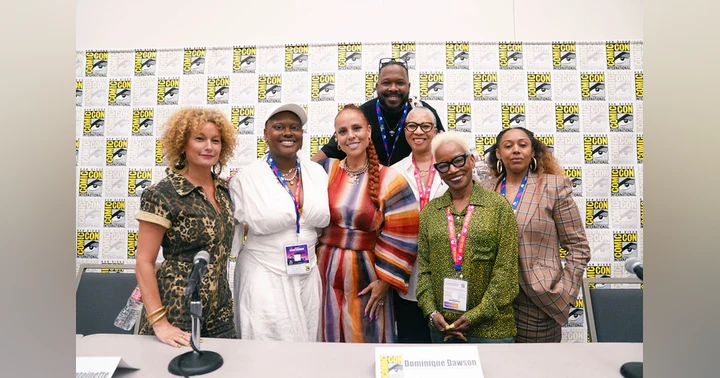
SDCC 2026 | ISBCD Panel Reveals the Hidden Art of Designing Costumes That Survive the Action